Quick Answer: The most common home appliance problems are a fridge that won’t stay cold, a washer that won’t spin or drain, a dishwasher that pools water, an oven that heats unevenly, and a dryer that leaves clothes damp. Most start with a simple cause — a dirty filter, a blocked vent, a worn door seal, or an unbalanced load — and a few safe checks can confirm it. Anything involving gas, sparking, burning smells, or water near electrics is not a DIY job: switch the appliance off and call a licensed technician.
Home appliances are the silent partners in daily life. They chill the groceries, wash the clothes, and cook the meals — until the day one of them stops. A warm fridge, a washer full of dirty water, or an oven that burns on one side can turn an ordinary evening into a stressful one. The good news is that most common home appliance problems are not mysterious, and many are not expensive to fix when they are caught early.
This guide covers the ten faults Comfort Appliance Service sees most often in Burnaby, Coquitlam, and Vancouver homes — what causes each one, what you can safely check, and when to call a technician.
1. A refrigerator that won’t stay cool
A warm fridge is the most urgent of the common home appliance problems, because food above 4°C (40°F) becomes unsafe. The usual causes are dust-covered condenser coils, a thermostat that has drifted out of range, or a door gasket that no longer seals. Cleaning the coils and checking the seal are safe homeowner jobs. If the milk still sours after that, the fault is deeper and needs a technician. See the full list of common refrigerator problems for the symptom-by-symptom version.
2. A washing machine that shakes, leaks, or won’t spin
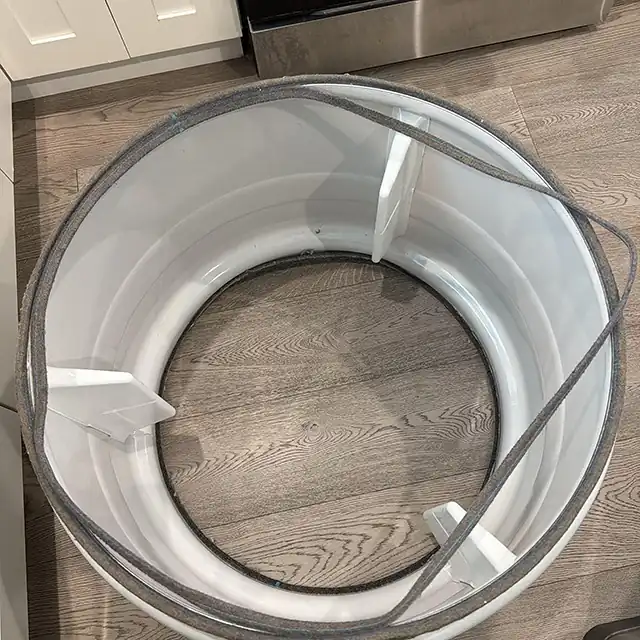
A washer that thumps like a helicopter usually has an unbalanced load or feet that are not level. Pause the cycle, redistribute heavy items, and check the levelling. If the noise continues with balanced loads, worn suspension parts or drum bearings may be at fault — and running on can turn a small repair into a major one. Leaks usually start at hoses or the door seal; check both before you run another cycle. The washing machine repair guide walks through diagnosis, parts, and costs in detail.
3. A dishwasher that won’t drain
Dirty water pooled at the bottom of the dishwasher usually means a clogged filter or a kinked drain hose — both are quick, safe checks. If the filter is clean, the hose is straight, and water still pools, the drain pump is the likely fault. Learn all the warning signs your dishwasher needs repair before a small drainage fault becomes a kitchen flood.
4. An oven that doesn’t heat evenly
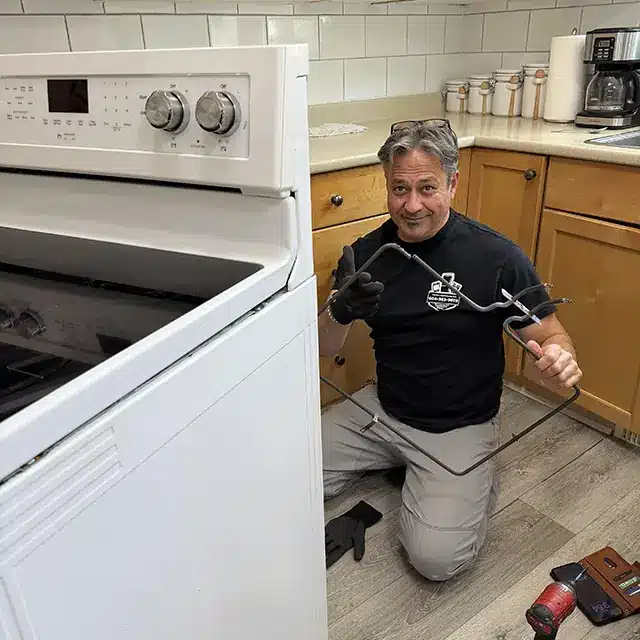
An oven set to 190°C that undercooks a roast or burns one side of a tray usually has a failing heating element (electric models), a weak igniter (gas models), or a thermostat giving bad readings. Test with an inexpensive oven thermometer to compare the real temperature with the display. Elements that won’t glow, or any gas fault, belong to a licensed technician — gas oven work in BC must be done by a licensed gas fitter.
5. A dryer that leaves clothes damp
Damp clothes after a full cycle almost always mean restricted airflow: a full lint filter, a blocked vent hose, or a vent outlet covered outside. Clean the filter after every load and check the vent run a couple of times a year — blocked vents are also a fire risk.
6. A microwave that runs but doesn’t heat
The plate spins, the light glows, the timer counts down — and the food stays cold. That usually means the magnetron has failed. Do not open a microwave yourself: microwaves store high-voltage electricity even when unplugged. Safe checks are limited to the door seal, power, and settings.
7. A cooktop burner that won’t ignite
For electric cooktops, a dead burner is often a faulty coil or a bad connection at the socket. For gas burners, food debris often clogs the igniter holes; a gentle clean once the burner is cool and off usually clears it. Never dismantle gas parts or adjust gas valves, and if you smell gas, leave the area and call your gas utility’s emergency line from outside.
8. A freezer that turns into an ice cave
Thick ice over everything usually means the defrost system is not cycling, the door gasket is letting moist air in, or the thermostat is set too low. A manual defrost and a temperature reset to −18°C (0°F) help in the short term. If ice returns quickly, the defrost heater, sensor, or seal needs a technician’s diagnosis.
9. An ice maker that goes on strike
An empty ice bin on a hot day is usually a blocked water line, a faulty inlet valve, or a freezer that is not cold enough for ice to form. Check the supply line for kinks and confirm the freezer is close to −18°C.
10. Electrical warning signs on any appliance
Some symptoms cut across every appliance and should never be ignored: burning smells, sparking, repeated breaker trips, or scorch marks near a plug. Switch the appliance off at the breaker and stop using it — these are fire risks, not inconveniences.
Triage: problem, urgency, safe check, who fixes it
| Problem | Urgency | Safe user check | Who fixes it |
|---|---|---|---|
| Fridge above 4°C | High — food safety | Settings, vents, door seal, coils | Licensed technician if checks fail |
| Gas smell or burner fault | Emergency — leave area | None beyond checking burner cap seating when cool and no smell | Licensed gas fitter / gas utility emergency line |
| Breaker trips, sparking, burning smell | High — fire risk | Switch off at the breaker, stop using it | Licensed technician |
| Microwave runs but does not heat | Medium — do not open it | Door seal, power, settings only | Licensed technician (high-voltage risk) |
| Washer leaking or violently shaking | High — water damage | Hoses, seals, load balance, levelling | Licensed technician if it persists |
| Dryer slow to dry | Medium — fire risk if vent blocked | Lint filter, vent hose, outside outlet | Licensed technician for element or sensor faults |
| Dishwasher pooling water | Medium — water damage | Filter, drain hose | Licensed technician for pump faults |
| Freezer icing up fast | Low–medium | Door seal, defrost once | Licensed technician if ice returns quickly |
Safety callout: never DIY gas, high-voltage, or sealed-system work. Safe user checks are limited to power, settings, filters, vents, hoses, load balance, and door seals. Anything beyond that is for a licensed technician.
Should you repair or replace?
As a rule of thumb, repair is usually worth considering when the appliance is younger, the fault is a single component, and the repair cost is well below replacement; replacement is usually worth considering when the appliance is near the end of its life, faults keep returning, or parts are no longer available. For a fuller comparison, see the repair or replace guide.
When DIY isn’t enough
Some common home appliance problems can be solved with cleaning, balancing, or checking seals. But once you reach faulty pumps, burned-out elements, or wiring issues, the risks and costs of DIY quickly outweigh the benefits. That is where home appliance repair from a local team makes the difference: a proper diagnosis, the right parts for your model, and a repair backed by a warranty of 1 week–90 days, set by the technician.
Diagnosis starts from $95, varies by appliance — call with your make and model to confirm your exact fee before the visit. If you need dishwasher repair and installation, washing machine repair and installation, or any other appliance repair in Burnaby, the fastest step is a call with the symptom, brand, and model number ready. For day-to-day prevention, see the professional appliance service and repair tips post.
Frequently Asked Questions
What are the most common home appliance problems people face?
The most common issues are refrigerators not cooling, washing machines that won’t drain or spin, ovens not heating evenly, dryers producing no heat, and dishwashers leaving dishes dirty or pooling water. Small problems like strange noises, odours, or clogged filters can also signal trouble if ignored.
Is it safe to repair appliances on my own?
It depends on the problem. Simple fixes like cleaning filters, unclogging hoses, balancing loads, or resetting breakers are generally safe for DIY. Anything involving wiring, gas connections, sealed refrigeration systems, or microwave high-voltage parts is best left to professionals.
How do I know when it’s time to call an appliance repair technician?
If the issue keeps coming back after basic troubleshooting, or if the appliance shows signs of electrical problems (sparks, burning smells, frequent tripping), it’s time to call a technician.
Can regular maintenance prevent appliance breakdowns?
Yes. Cleaning lint traps, changing water filters, wiping door seals, checking hoses, and not overloading machines can extend the life of your appliances and save money on big repairs later.
Sources
- Technical Safety BC — https://www.technicalsafetybc.ca/
- Health Canada, Consumer products and cosmetics — https://www.canada.ca/en/health-canada/services/consumer-product-safety.html
- BC Hydro, PowerSmart — https://www.bchydro.com/powersmart.html
- Natural Resources Canada, ENERGY STAR Canada — https://natural-resources.canada.ca/energy-efficiency/energy-star-canada