
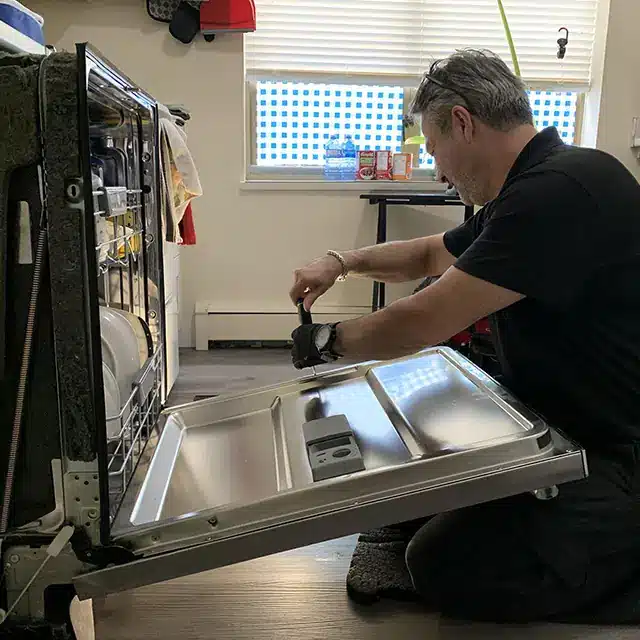
Quick Answer: The signs your dishwasher needs repair are water leaking onto the floor, dishes coming out dirty or cloudy, grinding or humming noises, water pooling at the bottom after a cycle, and cycles that won’t start or finish. A leak or a tripping breaker means stop using it now. A dirty filter or blocked spray arm is a safe homeowner check; a failing pump, motor, or control board needs a technician.
Dishwashers rarely break down overnight. Instead, they give off subtle warnings — small leaks, unusual noises, cycles that take longer than they should. The problem is that most homeowners overlook these signs until the appliance comes to a complete halt. For many Burnaby households, the dishwasher isn’t just a convenience; it’s an essential time-saver. Knowing the signs your dishwasher needs repair can save you from bigger headaches, unexpected expenses, and water damage in your kitchen.
Why paying attention to dishwasher problems matters
It’s easy to underestimate a dishwasher. Unlike your fridge or stove, it works quietly in the background. But when it starts failing, you quickly realise how much you rely on it. Ignoring minor issues can lead to higher water bills from leaks or incomplete cycles, costly kitchen repairs if water damage spreads to cabinets or floors, and bigger repair bills down the road — a simple part replacement addressed early is always cheaper than the damage a failing pump can do.
The 5 signs your dishwasher needs repair
1. Persistent leaks or puddles on the floor
Water pooling around your dishwasher isn’t just an inconvenience — it’s a red flag. In Burnaby homes with wood or laminate flooring, even a small leak can cause warping, staining, or mould growth if left unchecked. Common causes include a worn door gasket that no longer seals properly, a cracked or clogged drain hose, or loose connections inside the appliance.
What you can do: turn the machine off, shut the water supply if you can reach it safely, mop up the water, and do not run the machine while it is leaking. Check the rubber seal around the door for cracks or build-up. If leaks persist, it’s time to call a professional before the damage worsens.
2. Dishes coming out dirty or cloudy
A dishwasher’s entire purpose is to save you from scrubbing dishes by hand. If you’re pulling out plates that are still greasy or glasses covered in cloudy residue, something’s wrong. Possible reasons include a failing spray arm that isn’t distributing water evenly, the wrong detergent dose, or a heating element that isn’t bringing water to the right temperature.
3. Strange noises during operation
Dishwashers aren’t supposed to be silent, but they also shouldn’t sound like a construction site. Grinding sounds usually mean a worn-out bearing or debris in the chopper blade. Humming with no washing often means a motor trying to work but failing. Thumping or rattling usually means loose components inside. Turn the machine off and check the bottom rack for obstructions. If the noises persist, continuing to run the dishwasher could cause bigger damage.
4. Water not draining properly
When you open the dishwasher after a cycle and see a pool of dirty water sitting at the bottom, something’s off. A dishwasher not draining is usually caused by a clogged drain or filter, a blocked or kinked drain hose, or a faulty drain pump. Remove the bottom rack and check the filter for food debris — many homeowners forget to clean it regularly, and it’s the most common cause of standing water. But if the problem keeps coming back, it’s time for professional attention. A blocked or broken pump isn’t something you can fix with a paperclip or a vinegar rinse.
5. Dishwasher won’t start or complete a cycle
You press the button, lights flicker, maybe it hums, but the cycle never begins — or it shuts off midway. Possible reasons include a faulty door latch (the machine won’t run if it thinks the door is open), control-board malfunctions, or electrical issues. Check that the door latches firmly and that power is reaching the machine. Many “dead” dishwashers aren’t beyond repair — replacing a latch or circuit board can breathe years of life back into the appliance.
Beyond the top 5: other warning signs to watch
Bad odours even after cleaning, rust spots inside the tub, excessively long wash cycles, and a dishwasher that trips your home’s breaker are all worth addressing before they escalate. A breaker that trips repeatedly can point to a wiring fault, a leaking component reaching electrics, or a failing motor — stop using the machine, switch it off at the breaker, and call a licensed technician.
Dishwasher symptom, likely cause, and next step
| Symptom | Likely cause | Safe next step |
|---|---|---|
| Dishes dirty or cloudy | Blocked spray arms, wrong detergent dose, heating fault | Clean filter and spray arms, adjust detergent and rinse aid |
| Water pooling at the bottom | Clogged filter, kinked drain hose, pump fault | Clean the filter, check the hose run, then call a technician if pooling persists |
| Leaking at the door | Worn door seal, overloading, blocked vent | Wipe and inspect the seal, do not run it while leaking |
| Loud grinding or humming | Foreign object in the pump, worn motor | Switch off, check the filter area, call a technician for pump noise |
| Cycle will not start or finish | Door latch, power supply, control fault | Check power and that the door latches firmly, then call a technician |
| Bad smell | Trapped food, standing water, mould in the seal | Clean filter and seal, run a hot cleaning cycle |
Signs by brand: Bosch, LG, Whirlpool, and GE
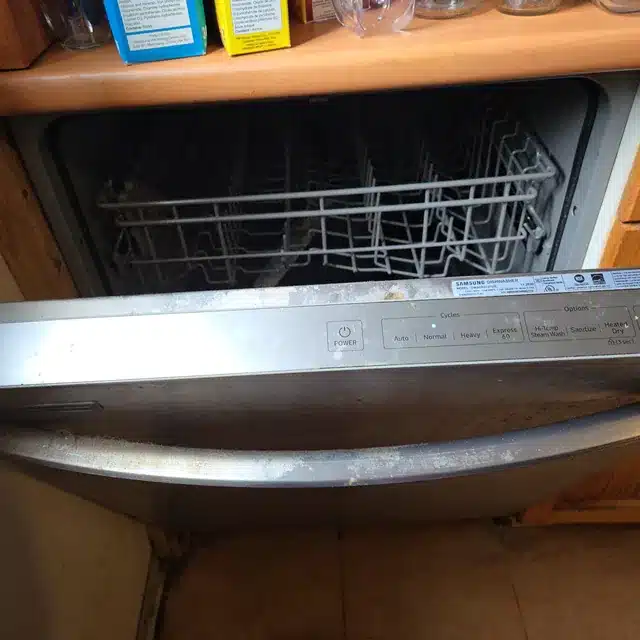
The five signs above apply to every brand, but the parts behind them differ. Bosch dishwashers are known for quiet operation, so new noise on a Bosch is worth investigating early — see Bosch dishwasher repair near me. LG dishwashers use sensor-driven cycles, so a cycle that won’t finish often points to a sensor or control fault — see LG dishwasher repair near me. Whirlpool dishwashers are workhorses, and their most common faults are drain and pump related — see Whirlpool dishwasher repair near me. GE dishwashers most often show inlet-valve and latch faults — see GE dishwasher repair near me. Whatever the brand, tell the technician the model number when you book so the right parts are planned for the visit.
What to do next
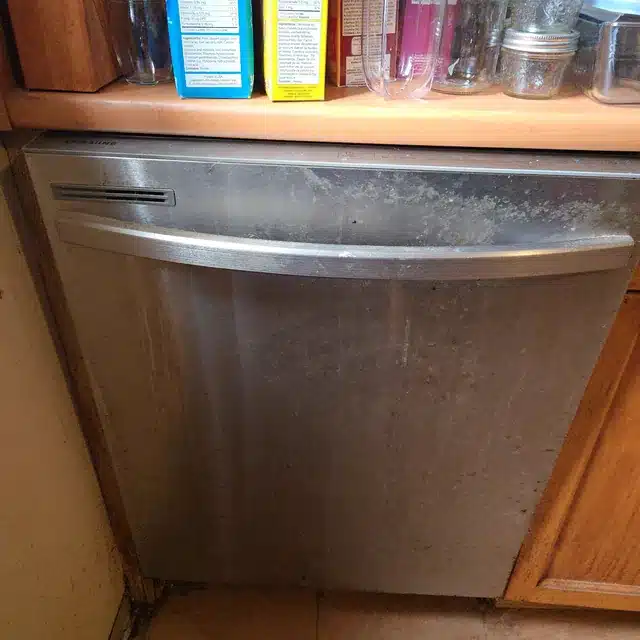
If you spotted one of these signs, the next step depends on urgency. A leak, a burning smell, or a tripping breaker means stop using the machine and call now — see emergency dishwasher repair in Burnaby. For anything else, book a diagnosis: it starts from $95, varies by appliance — call with your make and model to confirm your exact fee before the visit. Repairs carry a 1 week–90 days warranty, set by the technician.
Comfort Appliance Service provides dishwasher repair and installation across Burnaby, Coquitlam, and Vancouver, including dishwasher repair in Coquitlam. For appliance repair that catches problems early, see also affordable dishwasher repair in Burnaby and the guide to common home appliance problems.
Frequently Asked Questions
Why does my dishwasher smell bad even when the dishes look clean?
Odours usually come from food trapped in the filter, spray arms, or door seal, or from standing water that is not draining fully. Clean the filter, wipe the door seal, and run a hot empty cycle with a dishwasher cleaner. If the smell returns quickly, or water stays in the bottom after a cycle, the drain pump or hose may be at fault and a technician should inspect it.
Why are my glasses coming out cloudy or spotted in Burnaby?
Cloudiness is often caused by too much detergent, a rinse-aid setting that needs adjusting, or a heating problem stopping the detergent from dissolving. Metro Vancouver’s water is soft, so hard-water scale is rarely the cause. Try less detergent, top up the rinse aid, and check that the spray arms spin freely.
Is it safe to keep using a dishwasher that trips the breaker?
No — stop using it and switch it off at the breaker if it trips repeatedly, smells of burning, or shows scorch marks near the plug. Repeated tripping can point to a wiring fault, a leaking component reaching electrics, or a failing motor. Do not reset the breaker again and again to finish a load. Call a licensed technician.
Should I repair a dishwasher that is more than 10 years old?
It depends on the fault and the quote. A single pump, seal, or latch repair can still be worthwhile if the machine cleans well and costs well under half a replacement’s price. Replace it if faults keep returning, parts are hard to find, or rust and leaks are spreading. A technician’s diagnosis should separate a one-off fix from a machine near the end of its life.