
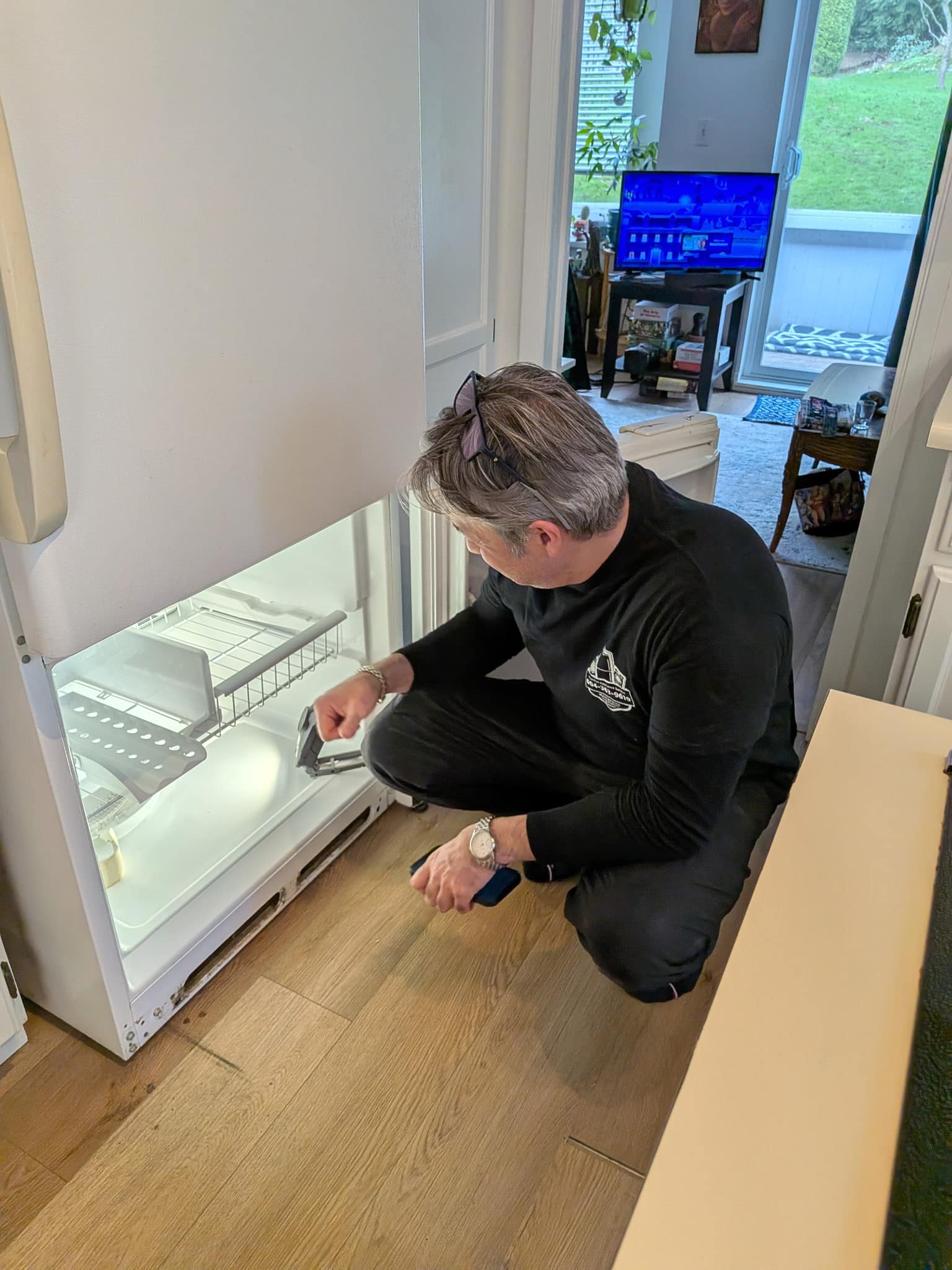
If your refrigerator section is warm but the freezer is still working properly, you are not alone. This is one of the most common refrigerator problems homeowners face. Many people assume the entire appliance has failed, but in reality the issue is often related to airflow, blocked vents, or a faulty component that prevents cold air from reaching the fridge compartment.
Understanding why this happens can help you decide whether it is a simple fix or something that requires professional repair. In this guide, we will explain the most common reasons your fridge is not cooling while the freezer works, what you can check yourself, and when it is time to call a technician.
How a Refrigerator Actually Cools
Before looking at the causes, it helps to understand how refrigerators work.
In most modern refrigerators, the cooling process starts in the freezer compartment. The evaporator coils inside the freezer create cold air. A fan then circulates that cold air through vents into the refrigerator section.
This means the freezer is responsible for generating the cold air for the entire appliance. If something blocks the airflow or prevents the fan from pushing air into the fridge compartment, the freezer may stay cold while the refrigerator becomes warm.
Common Reasons Your Fridge Is Not Cooling
Blocked Air Vents
Air vents allow cold air to travel from the freezer to the refrigerator section. If these vents become blocked by food containers, ice buildup, or debris, cold air cannot circulate properly.
You may notice that the freezer feels normal, but the fridge temperature slowly increases.
What you can do
Check the back panel and side vents inside the refrigerator. Make sure food items are not blocking the airflow.
Frost Buildup on the Evaporator Coils
Excessive frost can build up around the evaporator coils in the freezer. When this happens, the coils cannot release cold air effectively and the airflow to the refrigerator section becomes restricted.
This issue is often related to a malfunctioning defrost system.
Signs of this problem include
Ice buildup on the freezer back wall
Weak airflow from the refrigerator vents
The fridge gradually getting warmer
Faulty Evaporator Fan
The evaporator fan plays a critical role in moving cold air from the freezer into the refrigerator compartment.
If this fan stops working or becomes weak, the freezer may remain cold because it is close to the cooling source, but the fridge will not receive enough cold air.
Common symptoms include
Little or no airflow inside the fridge
Unusual noises from the freezer area
A fridge that is warm while the freezer works normally
Damaged Damper Control
The damper control regulates how much cold air flows from the freezer into the refrigerator. If the damper gets stuck or stops opening properly, the fridge section will not receive enough cold air.
This problem is more common in refrigerators with electronic temperature control systems.
Dirty Condenser Coils
Condenser coils release heat from the refrigerator. When they are covered in dust and debris, the appliance must work harder to maintain proper temperatures.
While this usually affects both compartments, it can sometimes cause uneven cooling between the freezer and refrigerator.
Cleaning the coils can often improve performance and prevent future problems.
Thermistor or Temperature Sensor Failure
Modern refrigerators rely on sensors to monitor temperature and regulate cooling cycles. If a thermistor or sensor sends incorrect readings to the control board, the fridge may not cool properly even though the freezer appears to function normally.
This type of issue usually requires professional diagnosis and repair.
Simple Troubleshooting Steps You Can Try
Before calling for repair, there are a few quick checks you can perform.
Make sure the refrigerator vents are not blocked
Check the temperature settings
Listen for the evaporator fan running in the freezer
Clean the condenser coils underneath or behind the fridge
Look for frost buildup on the freezer wall
Sometimes a simple adjustment or cleaning can restore normal airflow and solve the problem.
For fast, reliable service, visit our Appliance Repair in Burnaby page to learn more about our repair solutions for refrigerators, washers, dryers, dishwashers, ovens, and other major household appliances.
When to Call a Professional Appliance Repair Technician
If you have tried basic troubleshooting and the refrigerator still does not cool, the problem may involve internal components such as
Evaporator fan motor
Defrost heater or defrost thermostat
Control board
Damper assembly
These parts require proper tools and experience to diagnose and repair safely.
Professional technicians can quickly identify the root cause and prevent further damage to your appliance.
Preventing Refrigerator Cooling Problems
Regular maintenance can reduce the risk of cooling issues in the future.
Keep condenser coils clean
Avoid overloading the refrigerator
Ensure vents remain clear for proper airflow
Check door seals for leaks
Schedule maintenance if you notice unusual temperature changes
These simple steps help your refrigerator run efficiently and extend its lifespan.
Get Reliable Refrigerator Repair
If your fridge is not cooling but the freezer works, the issue is often related to airflow or a faulty internal component. Ignoring the problem can lead to food spoilage and more expensive repairs later.
At Comfort Appliance Service, our experienced technicians diagnose and repair refrigerator problems quickly and efficiently. Whether it is a faulty fan, defrost system issue, or airflow blockage, we can restore your appliance to proper working condition.
If you need professional refrigerator repair, contact our team today and get your kitchen running smoothly again.
How a fridge-freezer moves cold air
In most fridge-freezers, cold air is made in the freezer compartment, where the evaporator coils sit. A fan then pushes that cold air through vents and a damper into the fridge section. The fridge does not make its own cold air, so anything that blocks those vents, stops the fan, or lets frost build up on the coils can leave the freezer cold while the fridge warms up.
These are safe user checks only — settings, vents, seals, coils you can reach, and listening for the fan. Do not remove panels, handle refrigerant, or attempt sealed-system work. If the fridge stays above 4°C, call a licensed technician and keep perishable food chilled elsewhere.
What to check, in order, before calling
| Step | Safe user check | What it tells you |
| 1 | Fridge temperature setting and fridge thermometer reading | Whether the fridge is actually above 4°C or just feels warm |
| 2 | Vents in fridge and freezer clear of food and ice | Whether blocked airflow is starving the fridge of cold air |
| 3 | Door seals: close the door on a banknote and pull gently | Whether warm air is leaking in through a worn or dirty gasket |
| 4 | Listen for the evaporator fan when the compressor runs | Whether cold air is being moved from freezer to fridge |
| 5 | Condenser coils accessible at the front or back, dust-free | Whether poor heat rejection is making the system struggle |
| 6 | Frost on the freezer back wall | Whether a defrost fault is likely — stop here and call a technician |
| — | Anything involving refrigerant, compressor or sealed-system parts | Never DIY — call a licensed technician |
Related links: fridge not cooling but freezer works repair in Burnaby, appliance repair in Burnaby, refrigerator repair in Vancouver, refrigerator repair in Burnaby, how long does a fridge repair usually take, and DIY vs professional fridge repair. The existing homepage link in the body, worded as the Appliance Repair in Burnaby page, was kept and not retargeted to Vancouver.
Frequently Asked Questions
How cold should my fridge and freezer actually be?
Your fridge should sit between 1°C and 4°C, and your freezer at −18°C or colder. Use a simple fridge thermometer rather than trusting the dial, because dial numbers do not correspond to exact temperatures. If the fridge reads above 4°C for more than a couple of hours, perishable food can spoil faster. Move dairy, meat and leftovers to a cooler or a neighbour’s fridge while you troubleshoot.
Can blocked vents really warm up the whole fridge section?
Yes. In most fridge-freezer models, cold air is made in the freezer and pushed into the fridge through vents and a damper. If food containers, pizza boxes or ice block those vents, cold air cannot reach the fridge even though the freezer stays frozen. Move items away from the vents on both sides, keep the freezer organised rather than packed solid, and check again after a few hours.
How do I tell a frost problem from a fan problem?
A frost problem usually shows as a thick white layer on the freezer’s back wall, and the fridge warms gradually. A fan problem often shows as silence where you used to hear the evaporator fan, or weak airflow from the fridge vents. Do not remove panels or poke at frost with sharp tools — both faults need a technician if basic vent checks do not fix them.
Should I unplug the fridge and let it defrost manually?
A manual defrost can help if heavy frost is blocking airflow, but it is a temporary fix, not a cure. Unplug the fridge, move perishable food to a cooler, leave the doors open, and place towels around the base to catch meltwater. If frost returns within days or weeks, the defrost heater, thermostat or control is likely faulty. Call a technician rather than repeating manual defrosts indefinitely.
Why is my fridge warm after a power outage even though the freezer recovered?
After an outage, the freezer often recovers first because it is smaller, better insulated, and holds frozen mass that stays cold longer. The fridge section, with its larger air volume and frequent door openings, warms faster and cools more slowly. Check the temperature settings, confirm the fan is running, and give the fridge several hours with the doors closed. If it stays above 4°C, book a diagnosis.
Can dirty condenser coils make only the fridge warm?
Yes, indirectly. Dirty condenser coils make the whole cooling system work harder and less efficiently, and the fridge section usually shows the problem first because it depends on steady airflow from the freezer. Clean accessible coils gently with a brush or vacuum when the fridge is unplugged, following the manual. If coils are sealed behind panels or the fridge still struggles, leave the rest to a technician.
How long can food stay safe in a warm fridge before I should throw it out?
Perishable food kept above 4°C for more than two hours should be treated with caution, and anything that smells off, feels slimy, or has been warm overnight should be discarded rather than tasted to check. When in doubt, throw it out — food poisoning is not worth the saving. Keep the fridge doors closed during troubleshooting so the remaining cold air lasts as long as possible.