
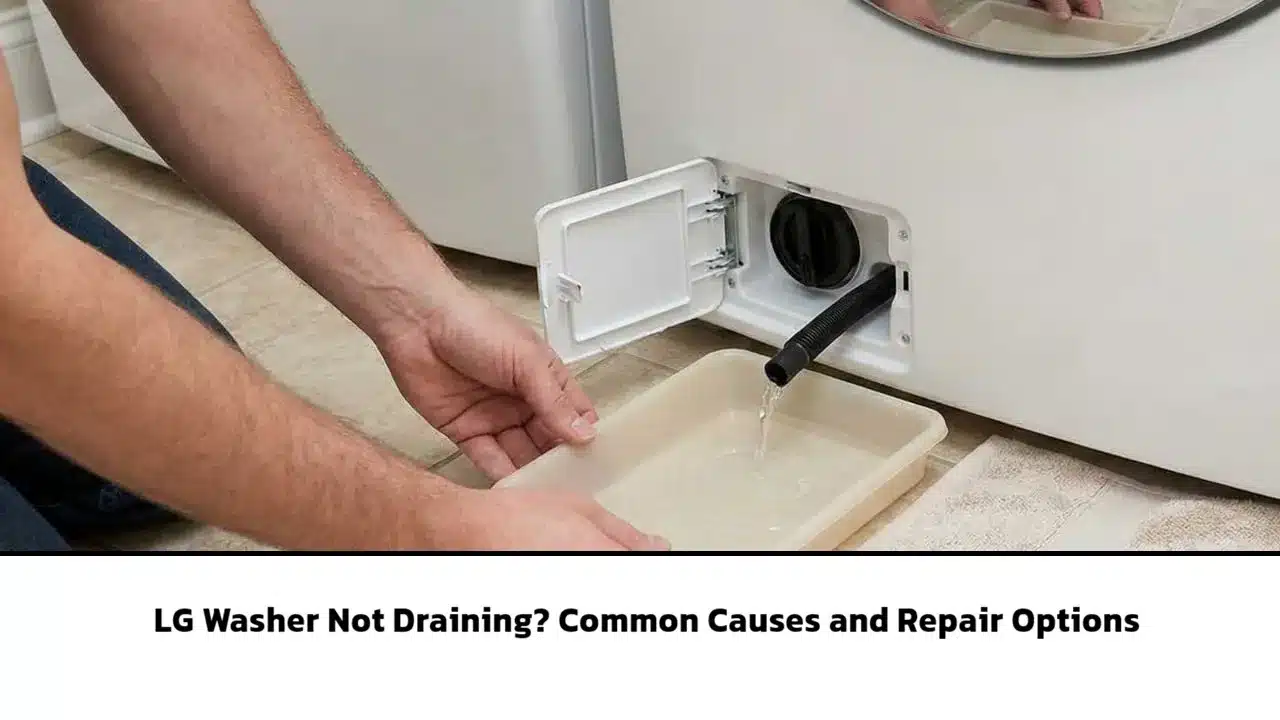
When your LG washer is not draining, it can quickly turn a routine laundry day into a frustrating situation. Water left sitting in the drum not only prevents your cycle from completing properly but can also lead to unpleasant odors and potential long-term damage.
The good news is that in most cases, the issue can be traced back to a specific and identifiable cause.
What Happens When Your LG Washer Won’t Drain?
A draining issue usually means that water is unable to exit the machine as designed. This can happen due to a blockage, a faulty component, or a problem within the washer’s control system.
Instead of guessing, understanding the root cause will help you fix the issue more effectively.
Common Causes of LG Washer Drainage Problems
Clogged Drain Pump Filter
One of the most common reasons behind drainage issues is a clogged drain pump filter. Over time, debris such as lint, small fabric fibers, and foreign objects can accumulate and restrict water flow.
This often results in water remaining in the drum after the wash cycle ends.
Blocked or Kinked Drain Hose
The drain hose is responsible for carrying wastewater out of the washer. If it becomes bent, twisted, or clogged, water will not be able to flow freely.
In many cases, the hose may be pushed against the wall or installed incorrectly, which can gradually lead to drainage problems.
Faulty Drain Pump
If both the filter and hose are clear, the drain pump itself may be the issue. This component is designed to push water out of the machine, and when it fails, draining will stop completely.
A common sign of a failing pump is a humming sound without actual water movement.
Door Lock or Lid Switch Malfunction
LG washers include safety features that prevent operation if the door is not properly locked. If the system does not detect a secure closure, the drain cycle may not start at all.
This can sometimes be mistaken for a drainage issue when the real problem is related to the locking mechanism.
Control Board or Sensor Failure
In more advanced cases, the issue may be linked to the washer’s internal electronics. A malfunctioning control board or sensor can interrupt the normal draining process or send incorrect signals to the machine.
These problems are less common but typically require professional diagnosis.
From installation to troubleshooting complex faults, having a certified technician makes all the difference in extending your appliance lifespan. With our expert LG appliance installation and repair services, you can count on efficient solutions tailored to your home needs.
Simple Troubleshooting Steps You Can Try
Before calling for service, it is worth checking a few key areas:
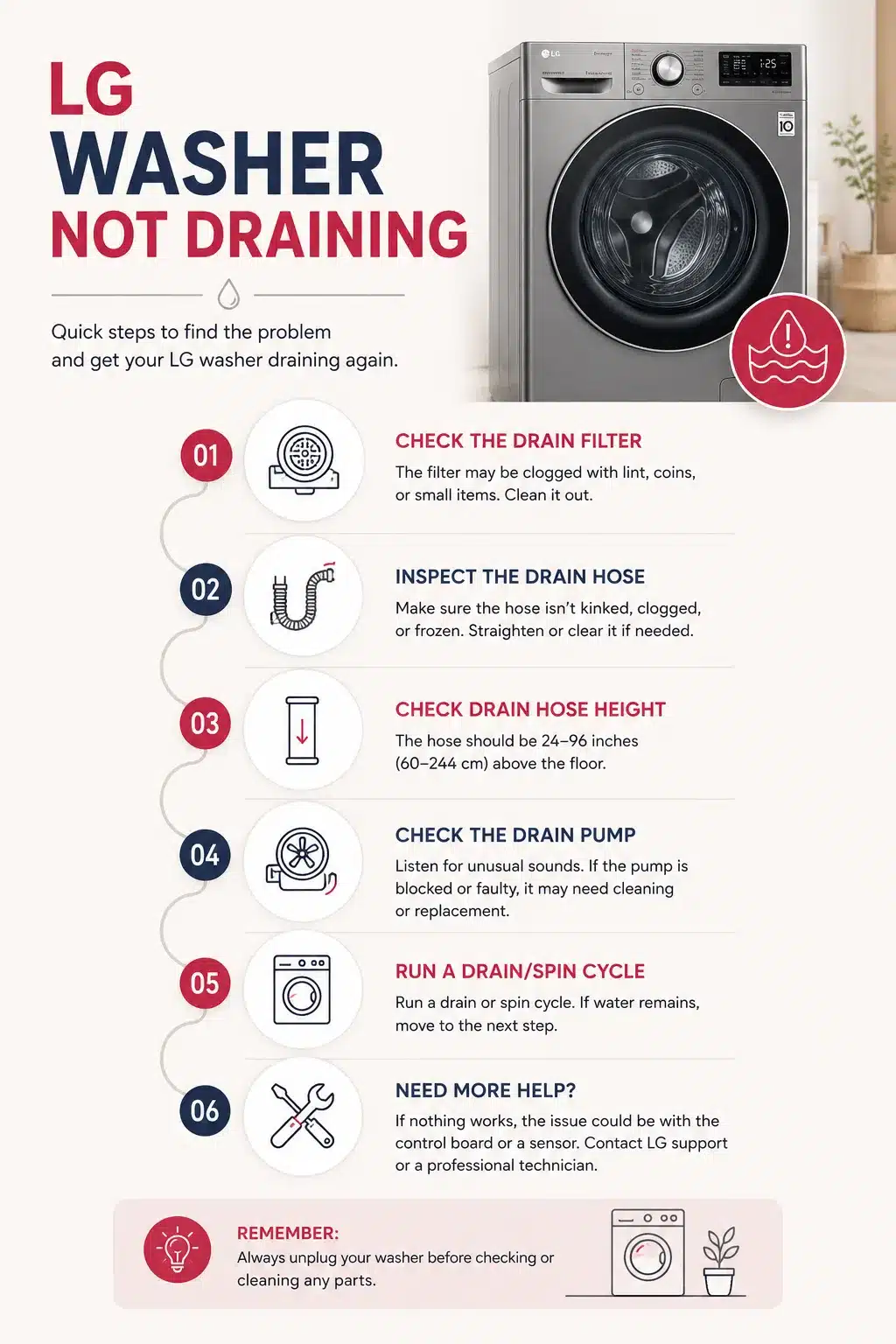
- Clean the drain pump filter thoroughly
- Inspect the drain hose for any blockages or bends
- Ensure the washer door is fully closed and locked
- Restart the machine to reset the system
- Pay attention to any unusual sounds during operation
These basic steps can often resolve the issue without further intervention.
When to Call a Professional Technician
If the washer still does not drain after completing the initial checks, the problem may require expert attention.
You should consider professional repair if:
- Water remains in the drum after multiple cycles
- The washer makes unusual noises during draining
- The issue keeps recurring
- The machine stops before completing the cycle
Delaying necessary repairs can lead to more serious damage and higher costs.