
Home appliances are like silent partners in our daily routines. They brew our morning coffee, wash the clothes we wear to work, chill the groceries we bring home, and cook the meals we gather around at night. But the moment one of them stops working, life feels instantly more complicated. Few things are more frustrating than opening a fridge to find it warm or discovering the dishwasher has left behind a swamp of dirty water. These moments fall into what we call common home appliance problems. While they’re stressful, many of them aren’t as mysterious or as expensive to fix as they may seem.
At Comfort Appliance Service, we’ve seen just about everything when it comes to broken or misbehaving machines. Some problems are quick fixes that homeowners can try themselves; others require the right tools, training, and safety measures. In this guide, we’ll walk you through the ten most frequent appliance issues, what causes them, what you can realistically handle on your own, and when it’s time to call in the professionals.
1. The Refrigerator That Won’t Stay Cool
Nothing sends a homeowner into panic mode like a warm fridge. It’s not just about losing the groceries it’s the disruption of daily life. Most of the time, the cause is something simple: dust covered condenser coils that make the fridge work overtime, a thermostat that’s slipped out of its proper range, or a rubber door gasket that no longer seals tightly.
Cleaning coils and checking seals are easy DIY fixes that often bring a fridge back to life. But if you’ve already done that and the milk still sours overnight, there could be deeper issues with the compressor or internal sensors. That’s when calling in a repair service makes sense because replacing spoiled food every week costs far more than a professional diagnosis.
2. The Washing Machine That Sounds Like a Helicopter
We’ve all heard it: that deafening thump during the spin cycle that makes you wonder if the washer is about to take flight. Often, it’s as simple as an unbalanced load too many heavy towels bunched on one side. But sometimes, it points to worn-out drum bearings or even foreign objects stuck where they don’t belong.
A quick fix is to pause the cycle, redistribute the clothes, and ensure the machine is level on the floor. If the racket continues, the problem may be more mechanical. And while it’s tempting to ignore a noisy washer, doing so can turn a minor part replacement into a major repair.
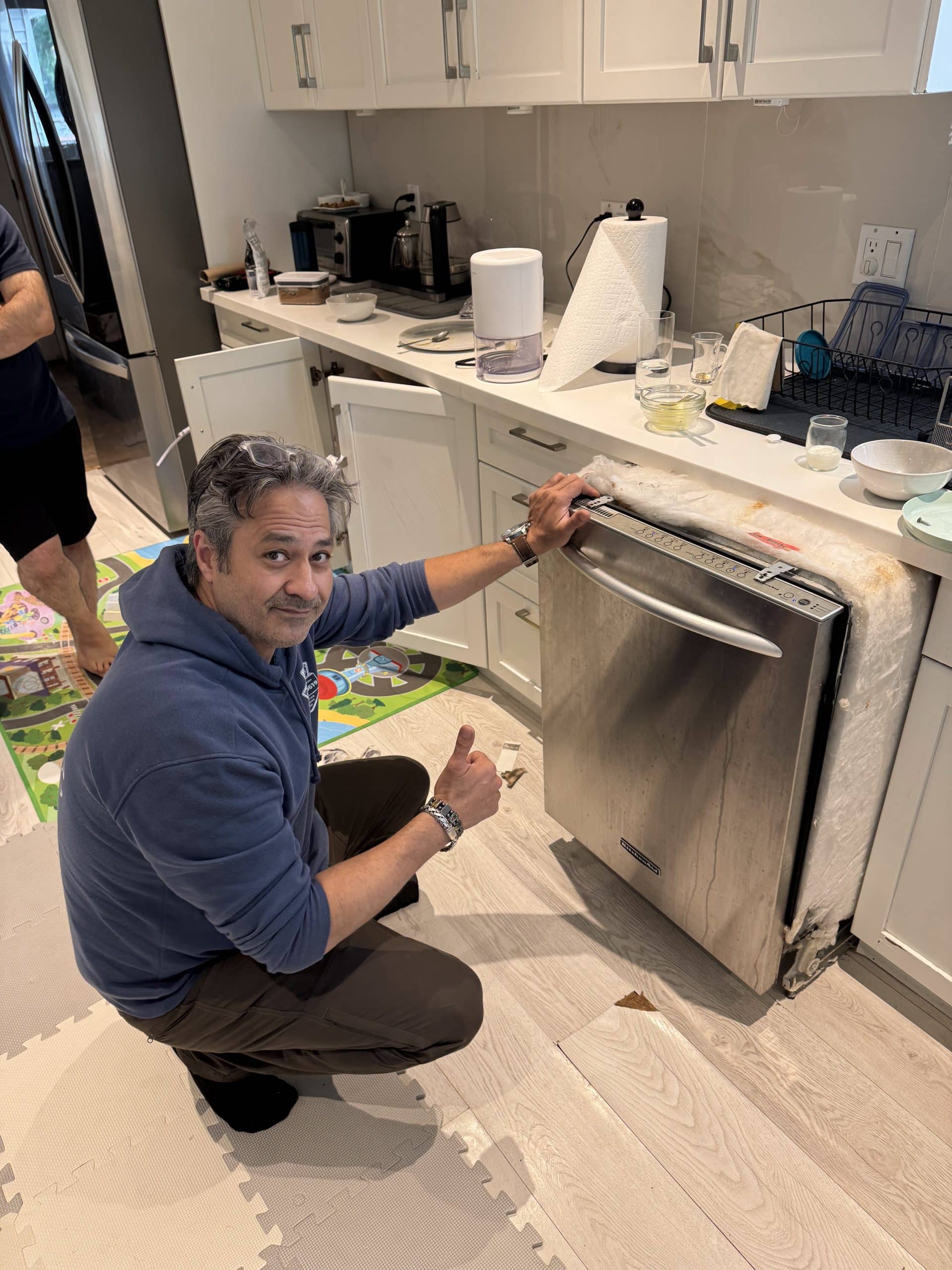
3. The Dishwasher That Refuses to Drain
Opening a dishwasher and finding dirty water pooled at the bottom is a universal frustration. Most of the time, the filter is clogged with food scraps, or the drain hose is kinked. Both can be cleaned or straightened with minimal effort.
But when you’ve cleared the filter, checked the hose, and it still won’t drain, the issue is likely with the pump. That’s when a repair call saves you from hours of trial and error and possibly from buying a brand-new machine unnecessarily.
4. The Oven That Doesn’t Heat Evenly
Few things derail dinner plans like an oven that can’t keep its temperature. You set it to 375°F, only to find your roast is undercooked or your cookies are burned on one side. In electric ovens, the heating element is often the culprit. In gas models, it’s usually the igniter. And sometimes, the thermostat itself is giving you bad information.
You can test with an inexpensive oven thermometer to see if the actual temperature matches the display. But if you see elements that won’t glow red or an igniter that doesn’t spark, the repair usually requires parts and expertise beyond the average homeowner’s toolkit.
5. The Dryer That Leaves Clothes Damp
There’s something especially frustrating about pulling clothes out of the dryer only to find them just as damp as when they went in. Lint buildup is often to blame, either in the trap or the vent hose. Less frequently, the heating element or moisture sensor has failed.
The easiest step is prevention: clean the lint filter after every load, and give the vent hose a thorough check a couple of times a year. Not only will your dryer work better, but you’ll also reduce the risk of fires. If the basics don’t help and your jeans are still taking two cycles to dry, it’s time to have a professional test the heating components.
6. The Microwave That Looks Fine but Doesn’t Heat
The plate spins, the light glows, the timer counts down and yet your food stays cold. That usually means the magnetron, which generates heat, has failed. Unlike a clogged filter or dirty seal, this isn’t something to tackle at home. Microwaves store high-voltage electricity even when unplugged, and repairs can be dangerous without the right training.
If the door won’t close properly because of crumbs or debris, a quick cleaning can sometimes solve the problem. Beyond that, though, microwaves fall firmly into the “call for help” category.
7. The Stovetop Burner That Refuses to Ignite
You’re ready to boil pasta, but the burner won’t cooperate. For electric stoves, it could be a faulty coil or a bad connection at the socket. For gas stoves, food debris often clogs the igniter holes. A gentle scrub with a toothbrush usually clears the way.
If cleaning and swapping parts doesn’t help, then the issue may be internal wiring or a failed switch repairs best left to those with experience. Gas and electricity aren’t things to tinker with unless you’re trained.
8. The Freezer That Turns Into an Ice Cave
Freezers are supposed to keep food frozen, but when they cover everything in thick ice, something’s wrong. Sometimes the defrost system isn’t cycling properly. At other times, the door gasket is loose, allowing moisture to seep in. And in some cases, the thermostat is simply set too low.
Defrosting manually and adjusting the temperature can help in the short term. But if ice returns quickly, it’s a signal that something deeper needs attention.
9. The Garbage Disposal That Stops Cold
Flip the switch, and instead of grinding, you get a dull hum or worse, silence. Garbage disposals jam easily when fibrous foods like celery or foreign objects like utensils slip inside. Many units have a small reset button on the underside that’s worth pressing first. If that doesn’t work, a hex key can manually turn the blades from below and free the jam.
The golden rule here: never, ever put your hand inside, no matter how sure you are it’s unplugged. A stuck motor can spring to life suddenly and cause serious injury. If the disposal won’t budge, call for backup.
10. The Ice Maker That Goes on Strike
Nothing’s more disappointing than reaching for ice on a hot day only to find the tray empty. A blocked water line is often the culprit, or a faulty valve that isn’t allowing water to flow. In some cases, the freezer itself isn’t cold enough for ice to form correctly.
Start by checking the supply line for kinks and making sure the freezer temperature is close to 0°F. If neither helps, it’s likely a part replacement job.
When DIY Isn’t Enough
By now, you’ve probably noticed a theme: some common home appliance problems can be solved with a little cleaning, balancing, or checking seals. But once you hit the point of faulty pumps, burned-out elements, or wiring issues, the risks and costs of DIY quickly outweigh the benefits.
That’s exactly why we do what we do at Comfort Appliance Service. With years of hands-on experience, we know how to quickly identify what’s really going on whether it’s a stubborn dishwasher, a dryer that just won’t dry, or a fridge that refuses to stay cool. Our technicians come equipped with the right tools and genuine replacement parts, so you don’t waste time guessing.
Frequently Asked Questions About Common Home Appliance Problems
1. What are the most common home appliance problems people face?
The most common issues include refrigerators not cooling, washing machines that won’t drain, ovens not heating evenly, dryers producing no heat, and dishwashers leaving dishes dirty. Small problems like strange noises or clogged filters can also signal trouble if ignored.
2. Is it safe to repair appliances on my own?
It depends on the problem. Simple fixes like cleaning filters, unclogging hoses, or resetting breakers are generally safe for DIY. But anything involving wiring, gas connections, or major parts (like compressors or motors) is best left to professionals.
3. How do I know when it’s time to call an appliance repair technician?
If the issue keeps coming back after basic troubleshooting, or if the appliance shows signs of electrical problems (sparks, burning smells, frequent tripping), it’s time to call a technician. Also, if your appliance is under warranty, professional repair protects your coverage.
4. What’s the average lifespan of common home appliances?
On average, refrigerators last 10–15 years, washing machines about 10 years, dryers 10–13 years, ovens 13–15 years, and dishwashers around 9–10 years. Regular maintenance can stretch these numbers a bit further.
5. Why is my refrigerator running but not cooling properly?
This is one of the most common home appliance problems. The culprit is often dirty condenser coils, a faulty thermostat, or a worn-out door gasket. Cleaning the coils and checking seals usually helps, but if it doesn’t, a technician should inspect the cooling system.
6. Can regular maintenance prevent appliance breakdowns?
Absolutely. Something as simple as cleaning lint traps, changing water filters, wiping door seals, and not overloading machines can dramatically extend the life of your appliances and save you money on big repairs later.
7. Should I repair or replace an old appliance?
A good rule of thumb is the 50% rule: if the cost of repair is more than half the cost of a new appliance and the unit is already past half its lifespan, replacement usually makes more sense. Otherwise, repair is often the smarter choice.
8. Why does my washing machine smell bad even after cleaning?
Odors often come from mold or detergent buildup in the rubber door gasket, detergent drawer, or hidden spots. Running a hot cleaning cycle with vinegar or a washer cleaner, plus leaving the door open after use, usually solves the problem.
9. My dryer takes forever to dry clothes. What should I do?
First, clean the lint trap and vent hose clogs restrict airflow and reduce drying efficiency. If that doesn’t help, the heating element or thermostat may need replacement. Keeping vents clear is also important for fire safety.
10. How quickly can Comfort Appliance Service fix common appliance problems?
We understand how disruptive appliance breakdowns can be. In most cases, we offer same day or next-day service for urgent issues. Our technicians carry common parts and tools to solve problems on the spot whenever possible.